
Last updated November 17, 2026
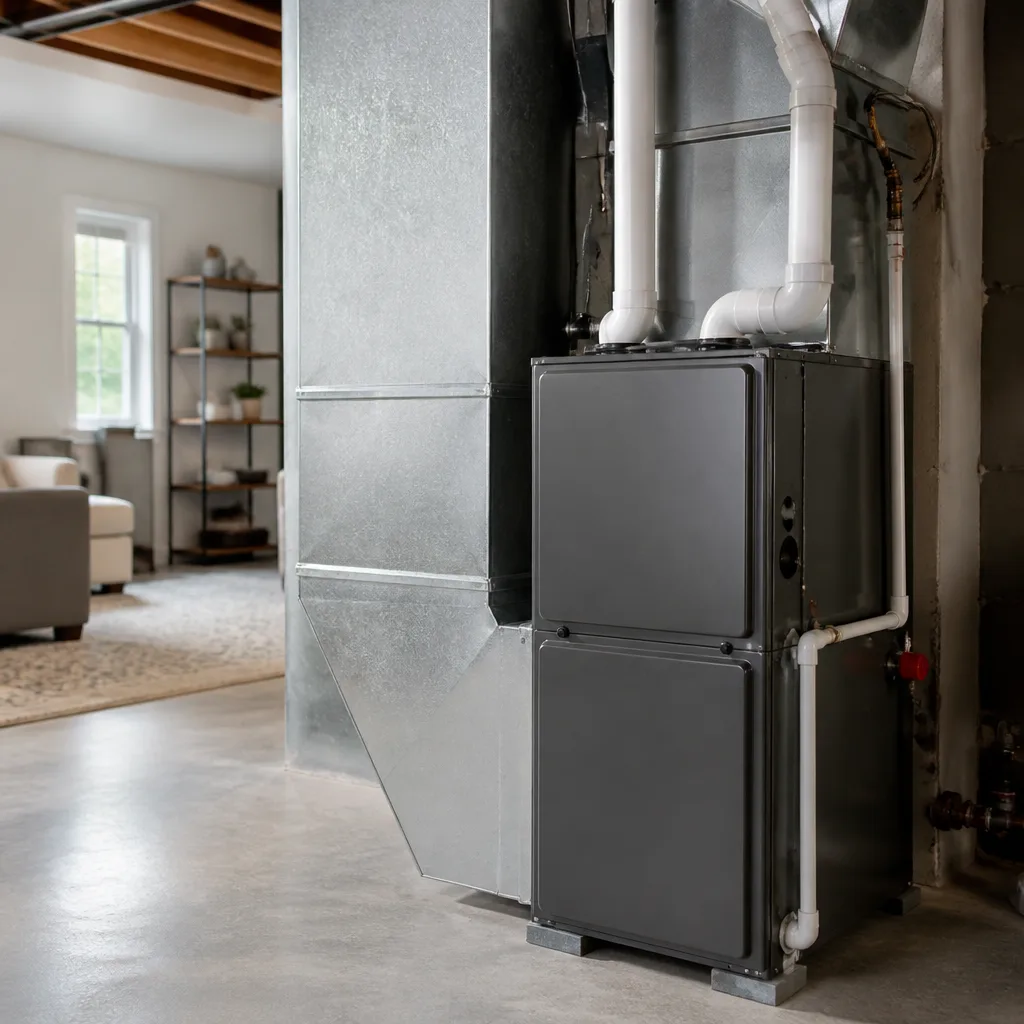 Furnace & heating
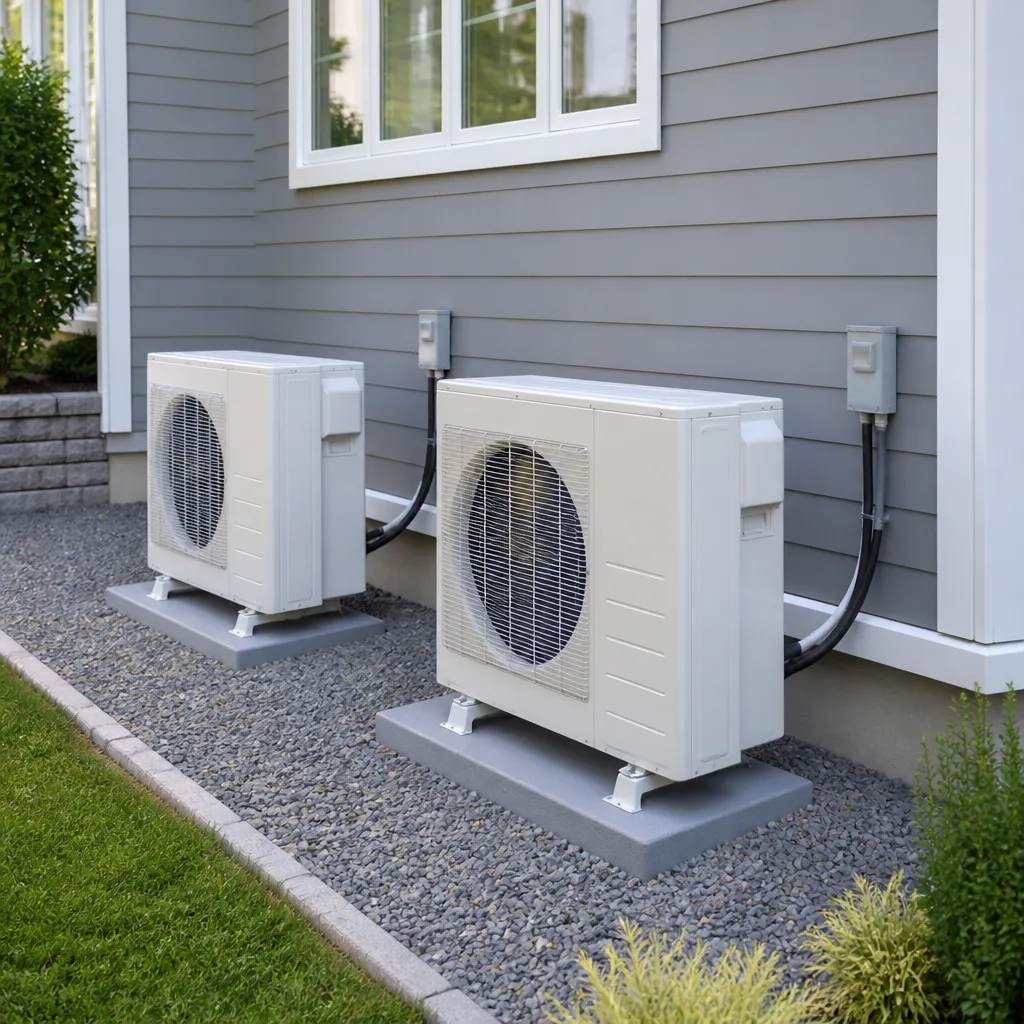 Heat pumps
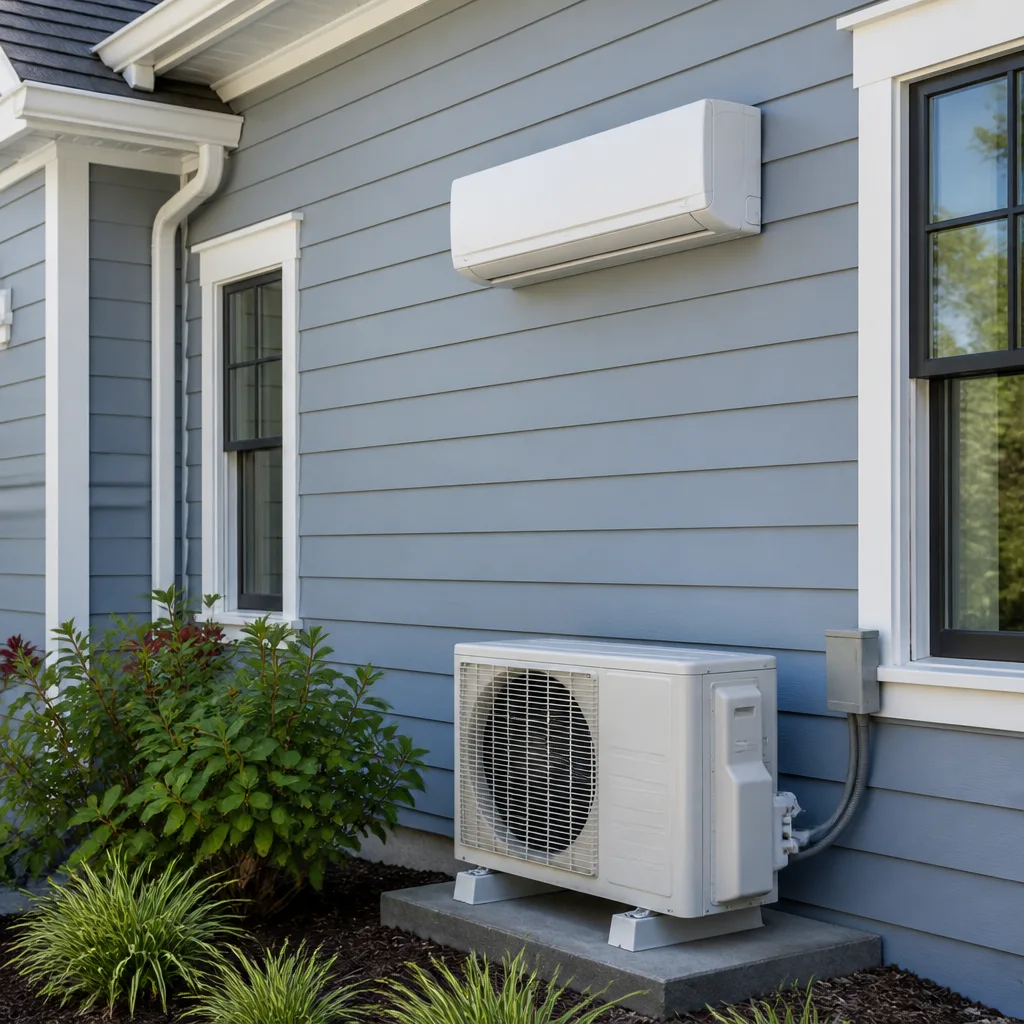 Ductless mini splits
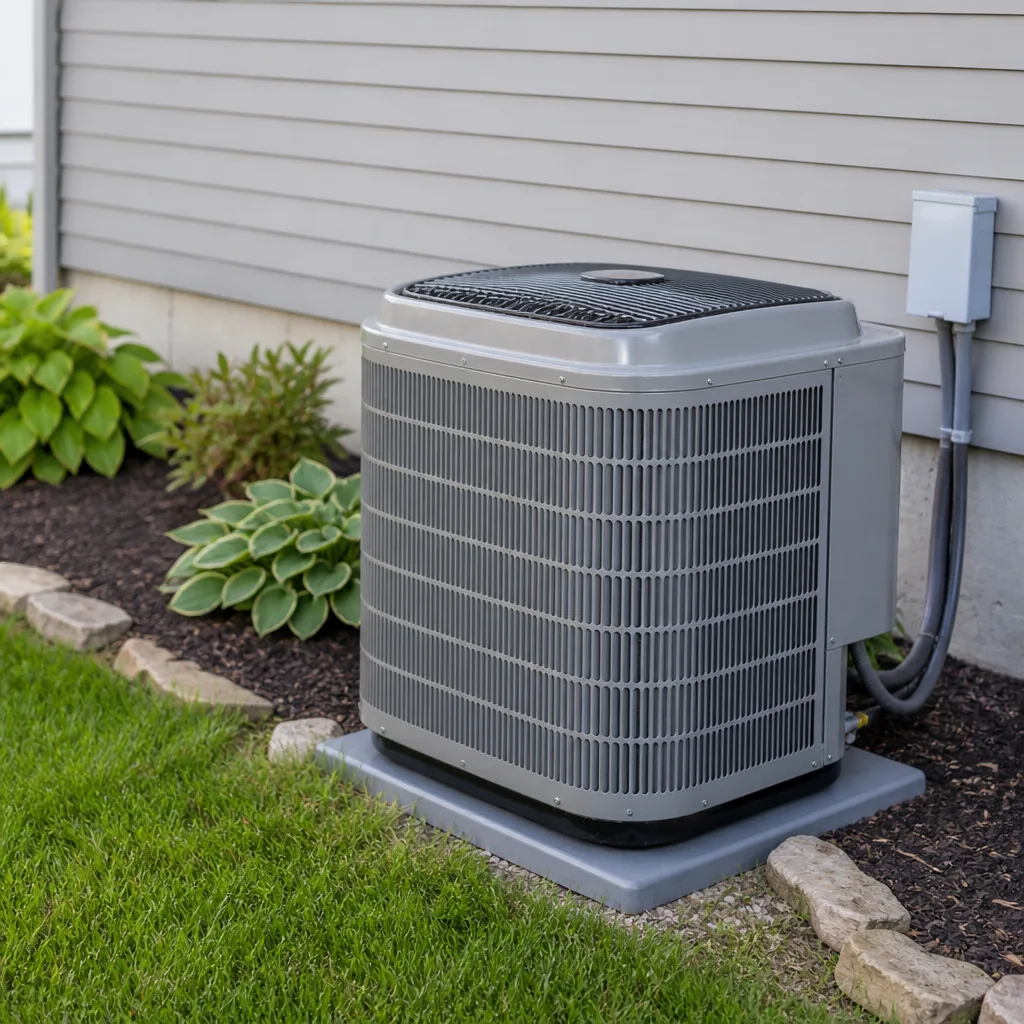 Carrier
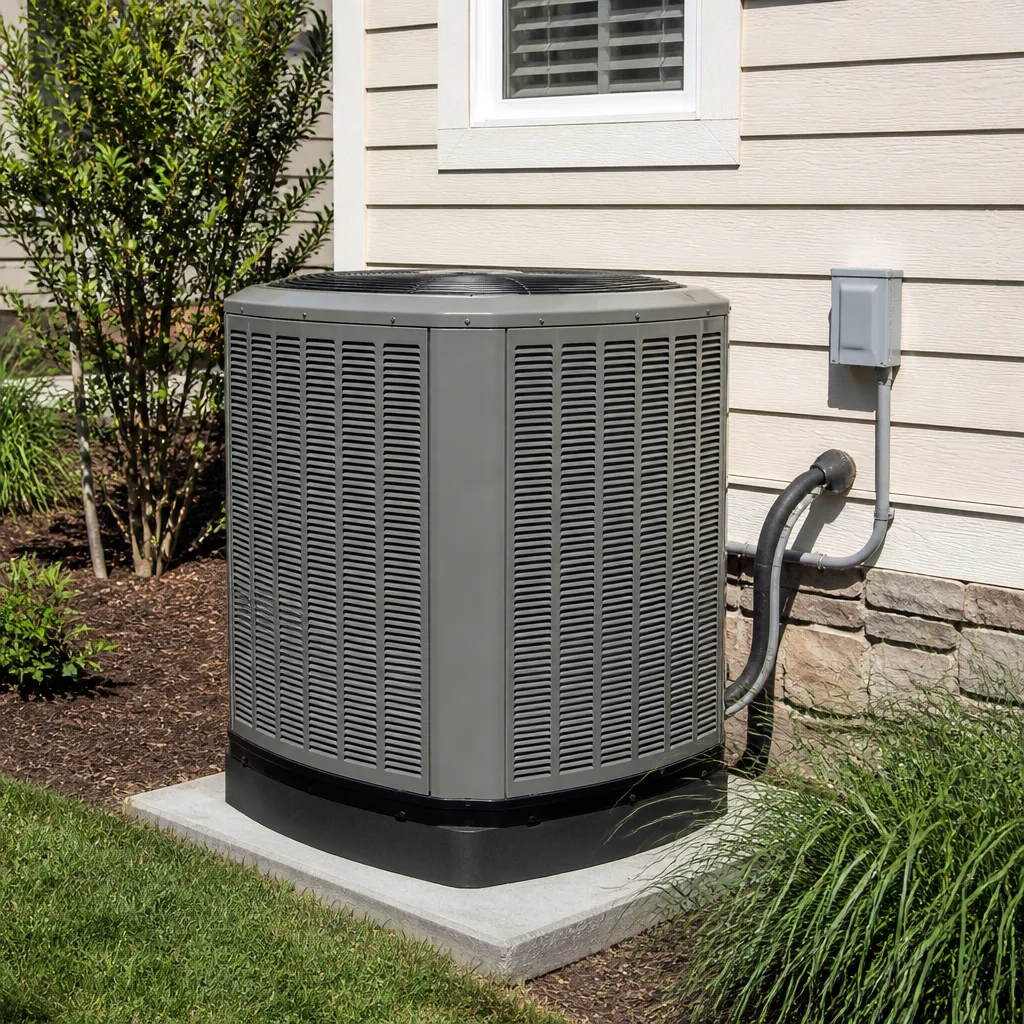 Trane
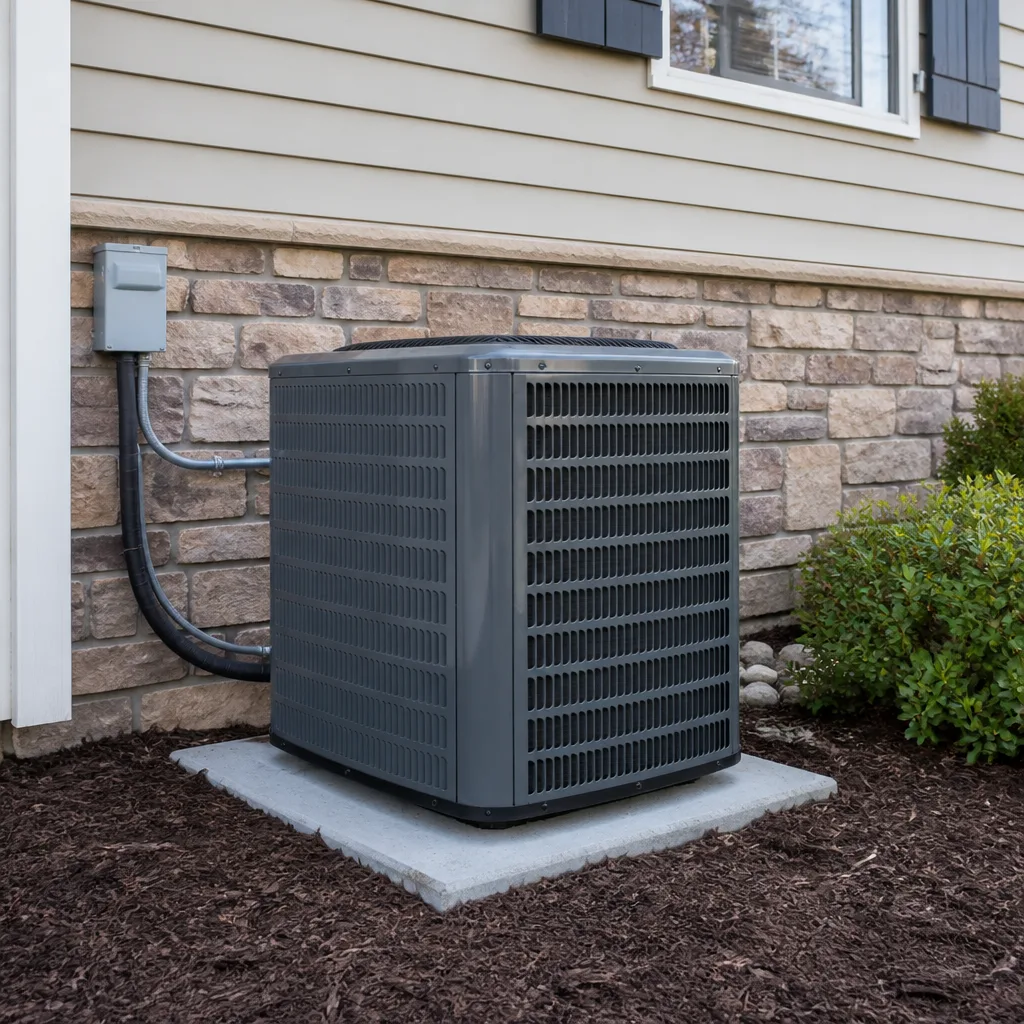 Goodman
Seasonal tune-up and full diagnostic on your Carrier, Trane, or Goodman system - readings shown to you before any repair is proposed
Diagnosis first, numbers second - you approve the repair price before a single part goes in.
Get your free estimateHow to Hire an HVAC Contractor in Mesquite: A Step-by-Step Guide
Most homeowners hiring an HVAC contractor focus on the price at the bottom of the quote. In a smaller market like Mesquite, that’s the wrong place to start. The bigger risk isn’t overpaying by a few hundred dollars – it’s hiring a crew that holds no Nevada license, can’t be found when the work fails, and treats your home as overflow territory on the way back to Utah. Nevada requires HVAC contractors to carry a C-21 license through the State Contractors Board, and that license doesn’t transfer across state lines. This guide walks you through licensing checks, the load calculation question, quote comparison, and the local red flags that matter most in Mesquite.
Quick Answer
To hire an HVAC contractor in Mesquite, verify a current Nevada C-21 license through the State Contractors Board, confirm the company will perform a Manual J load calculation before quoting a replacement, get two or three written itemized estimates, and refuse any contractor who demands full payment upfront or can’t point to a verifiable local presence. A legitimate contractor welcomes all four questions. Anyone who sidesteps them is telling you something important before the work even starts.
Styles & brands we work with
- AC installation
- Furnace & heating
- Heat pumps
- Ductless mini splits
- Carrier
- Trane
- Goodman
Table of Contents
- Step 1: Verify the Nevada C-21 License Before Anything Else
- What to Do When a Contractor Is Licensed Only in Utah
- How to Tell a Local Specialist from a Regional Generalist
- Why Manual J Load Calculation Is a Deal-Breaker
- How to Compare HVAC Quotes Apples to Apples
- Small-Market Red Flags That Matter in Mesquite
- What Mesquite’s Climate Demands from Your Contractor
- Timing Your Replacement Around the Mesquite Heat
Step 1: Verify the Nevada C-21 License Before Anything Else
Every HVAC contractor working in Nevada must hold a C-21 license issued by the Nevada State Contractors Board (NSCB). That license covers the installation, alteration, and repair of refrigeration and air conditioning systems. Asking for the license number is the first step. Verifying it takes less than two minutes and tells you more than any review or referral.
Here’s the process, start to finish:
- Ask the contractor for their Nevada license number in writing – on the estimate, in an email, or on the business card. If they hesitate, that’s your answer.
- Go to the NSCB website and open the license search tool. It’s a public database and there’s no login required.
- Enter the license number and check three fields: license status (must be active), license classification (must be C-21 for HVAC work), and expiration date.
- Check the complaint history. A single resolved complaint isn’t disqualifying. A pattern of unresolved ones is.
- Confirm the license name matches the business name on your quote. If the license belongs to a different entity, ask why.
This is the single most important step in hiring anyone for AC work in Mesquite. Nevada’s licensing requirements exist because HVAC work touches electrical circuits, refrigerant handling, and permit compliance. An unlicensed install can void manufacturer warranties, create insurance problems, and fail a future home inspection. None of that shows up in a low bid.
One more thing worth knowing: Nevada license numbers aren’t the same as EPA Section 608 refrigerant certification numbers. A technician can legally handle refrigerant under EPA rules without holding a Nevada contractor license, because the EPA certification applies to individuals and the NSCB license applies to the business. The business needs the C-21. Ask for both if you want to be thorough.
What to Do When a Contractor Is Licensed Only in Utah
Mesquite sits roughly 40 miles from the Utah border, and crews from St. George and other Utah communities do cross into Nevada for work. Some are legitimate and licensed on both sides. Many aren’t. When a contractor tells you they hold a Utah license but not a Nevada one, the correct response is simple: they cannot legally perform HVAC work in Mesquite under that credential alone.
Nevada does not recognize out-of-state HVAC licenses as a substitute for a C-21. A Utah license is issued under Utah’s rules and Utah’s enforcement system. If the work fails, the Nevada State Contractors Board has no jurisdiction over an unlicensed contractor – your recourse shrinks to civil court, and the contractor may be difficult to locate once they cross back into Utah.
That said, there are legitimate ways for an out-of-state company to work in Mesquite:
- They hold an active Nevada C-21 in addition to any out-of-state credentials. Verify both through the NSCB.
- They subcontract to a Nevada-licensed local contractor who pulls the permit and carries the liability. Ask to see that arrangement in writing before any work begins.
- They’re performing non-licensed work only – which for HVAC installation or repair, they aren’t. Service, repair, and install all require the license.
If a dispatcher tells you they’re licensed “in Utah and it covers Nevada” or simply declines to discuss licensing, end the conversation. That answer alone disqualifies them. You don’t need to be rude about it – just say you’re getting another quote and move on. Your future self will thank you when the compressor fails inside the warranty period and you know exactly who’s accountable.
How to Tell a Local Specialist from a Regional Generalist
A regional generalist treats Mesquite as overflow territory – a zip code on the outer edge of a service map, staffed by whoever isn’t busy that day. A local specialist can tell you what brand of system is in your home, which neighborhoods in the area typically run 2-ton versus 3-ton equipment, and how the summer months here stress a condenser. The distinction matters most when something goes wrong and you need a call returned.
We’re an AC specialist by design. Repair, installation, and maintenance are the full scope of what we do – no heating, no plumbing, no electrical. That narrow focus is the whole point. Our technicians have up to 10 years of experience, and they work on Carrier, Trane, Lennox, American Standard, Goodman, Rheem, York, Daikin, and Bryant systems. That covers nearly every brand a Mesquite homeowner is likely to have on the side of their house.
Here are the questions that separate a local specialist from a dispatch center:
- “Which brands do you service?” An AC specialist covering nine major brands can service whatever you already own. A single-brand dealer will tend to steer you toward their brand even when it isn’t the right fit for your home and budget.
- “Who will actually be at my house?” You want a named company relationship, not a dispatcher who hands your job to whichever subcontractor is available. Ask about the technician’s brand experience and whether they’ve worked on your specific model.
- “What did you notice about my system when you were here?” A specialist inspects and reports. A generalist quotes based on model number and stops.
- “How do you handle warranty work?” If the answer is a phone number you’ll never reach a human on, keep looking.
- “Are you set up to service this home in two years?” A company operating in Mesquite long-term gives you a single point of contact for the full life cycle of your system. That’s not a sales line – it’s the operational reality that determines who picks up when the unit fails in August.
One signal that almost never appears on a landing page but shows up quickly in conversation: a specialist asks what your indoor unit and outdoor unit are before quoting anything. A regional generalist asks for your zip code and comes back with a fixed price.
Why Manual J Load Calculation Is a Deal-Breaker
A Manual J load calculation is a room-by-room analysis of your home’s heating and cooling needs based on square footage, window placement, insulation values, orientation, and local climate data. It’s the industry-standard method for sizing HVAC equipment, and in Mesquite’s climate, oversizing is a real problem. A unit that’s too big cools the house too quickly, cycles off before dehumidifying, and wears its own compressor out faster than a correctly sized system would.
The size question is where a lot of quotes fall apart. A contractor quoting a replacement should be able to show you a Manual J calculation, or at minimum commit to running one before the equipment is ordered. A rule-of-thumb estimate (“about a ton per 500 square feet”) is not a load calculation. It’s a shortcut, and in a climate that swings from 110-degree afternoons to cold desert nights, shortcuts show up as comfort problems.
Ask the question plainly: “Will you perform a Manual J load calculation before sizing my replacement?” A qualified contractor says yes without hesitation. If the answer is “we’ve been doing this for years and we know what size goes in that square footage,” it’s an immediate disqualifier, regardless of price. The right size for your home depends on factors that vary from house to house on the same street.
The same logic applies to duct sizing (Manual D) and equipment selection (Manual S). You don’t need to demand all three on a simple repair call, but for any full system replacement, the load calculation is the line in the sand. We perform it as part of every replacement estimate because AC replacement is a core specialty, not an occasional upsell. Getting the size wrong costs more than the calculation ever does.
How to Compare HVAC Quotes Apples to Apples
Two quotes for the same job in Mesquite can differ by thousands of dollars and still be comparing completely different things. The equipment tier is the biggest hidden variable. A contractor quoting an entry-level Goodman and another quoting a premium Trane are not giving you the same bid, and treating the lower number as the better deal usually means you’re comparing a base model against a mid-tier unit without realizing it.
Here’s the framework we suggest for comparing quotes:
- Match the model number. Every quote should list the exact model numbers of the outdoor condenser, indoor air handler or coil, and thermostat. Without model numbers, you can’t compare at all.
- Compare the tier, not the brand. Within any brand, there are entry, mid, and premium lines. Ask each contractor which tier they’re quoting and why. A Goodman in the right tier performs like an American Standard in the same tier – brand matters less than tier and installation quality.
- Check what’s included in labor. Permit, haul-away, new line set, drain pan, thermostat, start-up charges, and disposal should all be itemized. A cheap quote that excludes the permit or line set isn’t cheap.
- Ask about the warranty in writing. Look for the manufacturer’s equipment warranty (typically five years on parts, ten on the compressor for many residential units) plus the installing contractor’s labor warranty. Vague warranty answers are a red flag.
- Confirm the SEER2 rating. SEER2 is the current federal efficiency standard for residential systems. A quote that doesn’t list the SEER2 rating of the unit isn’t giving you the full picture.
- Look for the load calculation. If one quote includes a Manual J and another doesn’t, you’re not comparing the same scope.
The bottom line on pricing: we can’t give you a Mesquite-specific price range without seeing your home, because equipment tier and duct condition swing the number more than anything else. What we can say is that the written estimate is what sets the final price – nothing changes after the fact. Get an AC installation estimate in writing with model numbers, labor scope, and warranty terms, and compare on that basis. The AC repair decision follows the same logic: diagnose first, quote in writing, then decide.
Small-Market Red Flags That Matter in Mesquite
Smaller markets have their own failure modes. A company can look legitimate on a website and still leave you stranded because they’re two hours away and don’t carry local accountability. These are the red flags we see homeowners overlook most often:
- A vague or verbal-only warranty. If the labor warranty isn’t written into the estimate, assume it doesn’t exist. Manufacturer warranties are separate and come from the equipment maker, not the installer – but a good contractor helps you register the equipment so the manufacturer warranty is actually in force.
- No verifiable local presence. Ask for a physical Nevada address and confirm it through the NSCB listing or a public records search. A PO box in Utah and a Nevada phone number aren’t a local presence. If the address on the license doesn’t match, ask why.
- Payment in full upfront. No legitimate HVAC contractor demands 100% of the job cost before starting. A deposit covering equipment is normal; the balance after completion and inspection is normal. Full payment upfront on a multi-thousand-dollar install removes every incentive to finish the work correctly.
- A “no” on the load calculation. Covered in detail above, but it belongs on the red flag list too. In a hot climate, right-sizing is the foundation of a system that works.
- Pressure to replace when repair would do. Emergency pressure tactics after a failed compressor are common in small markets where a homeowner has limited options. A good contractor diagnoses first and gives you the repair-versus-replace math honestly. We’re an AC replacement specialist, and we still tell you when a repair is the right call.
- No permit pulled. Most cities require a permit for HVAC replacement, and in Mesquite the permit process is part of the accountable record. If a contractor suggests skipping the permit to save time, they’re suggesting you skip the inspection that protects you.
- Technicians who don’t know the brand in your yard. If they’re guessing at parts and connections, they don’t know your system. That’s an immediate “thanks, we’ll get back to you.”
What Mesquite’s Climate Demands from Your Contractor
Mesquite sits in the Virgin River valley at the northeast corner of the Mojave, and the climate puts specific demands on cooling equipment. Summers run hot and dry, with extended stretches where afternoon temperatures climb past 100 degrees. That heat load isn’t the same as a coastal California summer or a Rocky Mountain climate. It means equipment runs long hours, condensers cycle repeatedly in high ambient temperatures, and static pressure problems show up faster than in cooler climates.
A contractor who understands this climate will do a few things differently:
- Size for the peak summer load, not an average annual load. A unit sized for a mild summer will run at max capacity during the hottest weeks and never reach setpoint.
- Check refrigerant charge at operating temperature – not just at startup. In a hot climate, an undercharged system that reads fine on a cool morning will show the problem by afternoon.
- Look at attic insulation and duct leakage as part of the load conversation. In a Mesquite attic, duct loss can be a significant chunk of the cooling you’re paying for.
- Recommend the correct SEER2 tier for your expected run hours. Higher efficiency doesn’t pay back the same way in a climate with modest run hours as it does in one where the compressor runs 12 hours a day, six months out of the year.
The takeaway for hiring: ask each contractor how they account for local climate in their sizing and equipment recommendations. A generalist from a cooler market often doesn’t adjust, and the system ends up running flat out during the months when you actually need it. Whether you’re dealing with a failed unit or planning ahead, our team works on systems in this climate every week, which shapes the sizing recommendations we give.
Timing Your Replacement Around the Mesquite Heat
The best time to replace an aging AC system in Mesquite is before the hottest stretch of summer, not during a failure. A system that’s 12 to 15 years old and starting to need refrigerant top-offs or show declining performance is a candidate for planned replacement. Waiting until it fails in July leaves you scheduling around everyone else’s emergency and taking whatever install date is available.
Three questions to ask yourself when deciding whether to plan the replacement now:
- How many repairs has the system needed in the last two years? Frequent repairs signal a system nearing end of life.
- Is the system keeping up on the hottest afternoons? If it’s running continuously and still can’t hold setpoint, that’s the load calculation conversation, and sometimes a repair, sometimes replacement.
- Is the refrigerant type R-410A or the older R-22? R-22 systems are increasingly expensive to service because the refrigerant is phased out of production. The economics tilt toward replacement sooner for R-22 units.
Installation and replacement are load-calculated, scheduled work – not same-day jobs. That’s the honest timeline, and it’s better to plan around it than to discover it during a July heat wave. The repair-versus-replace math usually becomes clear after a full diagnostic, which is why we run diagnostics before recommending anything. If you suspect you’re close to a replacement decision, getting a load calculation and written estimate in advance is the smart move.
Maintenance is the other timing lever. Regular tune-ups catch compressor strain, refrigerant leaks, and capacitor wear before they turn into summer failures. Our maintenance service is a flat rate, and you get a written report of what the technician found – the technicians aren’t paid on what they sell, so the report is the report.
Common Mistakes to Avoid
- Hiring before checking the Nevada license. A Utah license or an EPA technician certification alone doesn’t authorize a business to perform HVAC work in Nevada. Check the C-21 through the NSCB before any work begins.
- Choosing the lowest bid without comparing equipment tiers. An entry-level unit and a premium unit from different brands can look the same on a quote if neither listing includes model numbers. Insist on model numbers and Tier.
- Skipping the Manual J load calculation. Rule-of-thumb sizing is the #1 cause of comfort problems in hot climates, and in Mesquite a slightly oversized unit can cycle itself into premature failure.
- Paying in full upfront. No legitimate contractor demands the entire job cost before the work is done. A deposit for equipment is fine; 100% upfront is a walk-away moment.
- Not getting the warranty in writing. Manufacturer warranties, registrar paperwork, and labor warranties are three separate things. If the estimate doesn’t spell out all three, it’s incomplete.
- Ignoring permit requirements. Most Mesquite HVAC replacements require a permit through the city. If a contractor suggests skipping it, you’re the one exposed if the inspection becomes an issue at sale or insurance renewal.
- Waiting until the system fails to plan a replacement. Same-day service is available for repair calls and emergencies, but installation is scheduled work. Planning a replacement ahead of the hottest weeks gives you choices.
See the difference
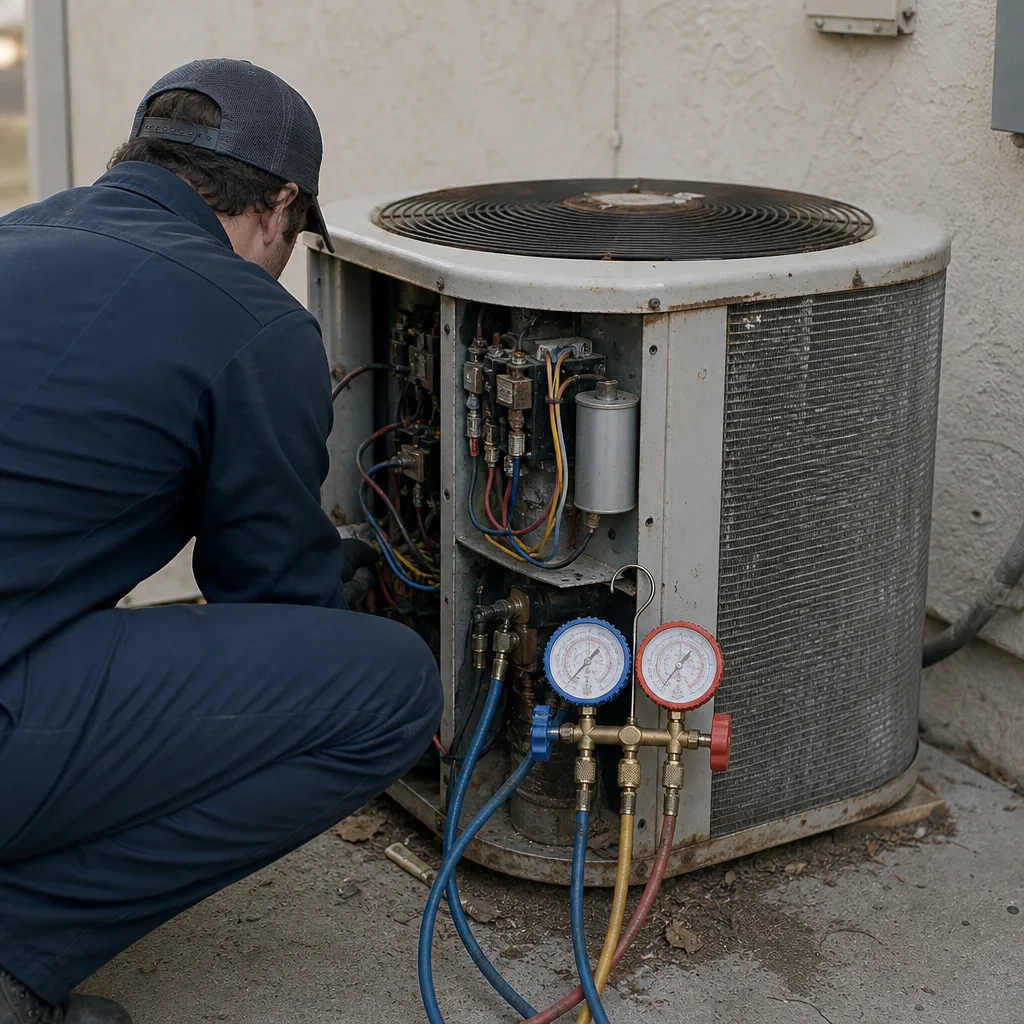 Before
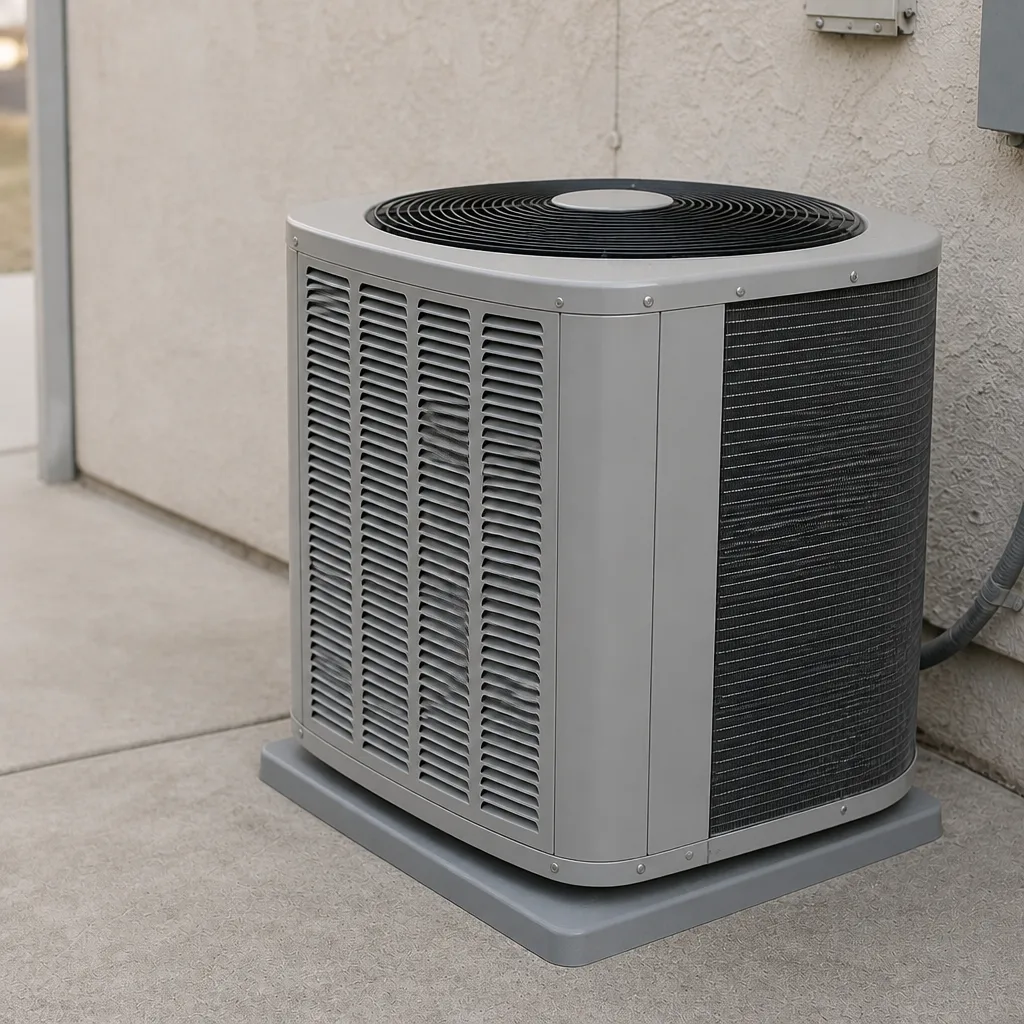 After
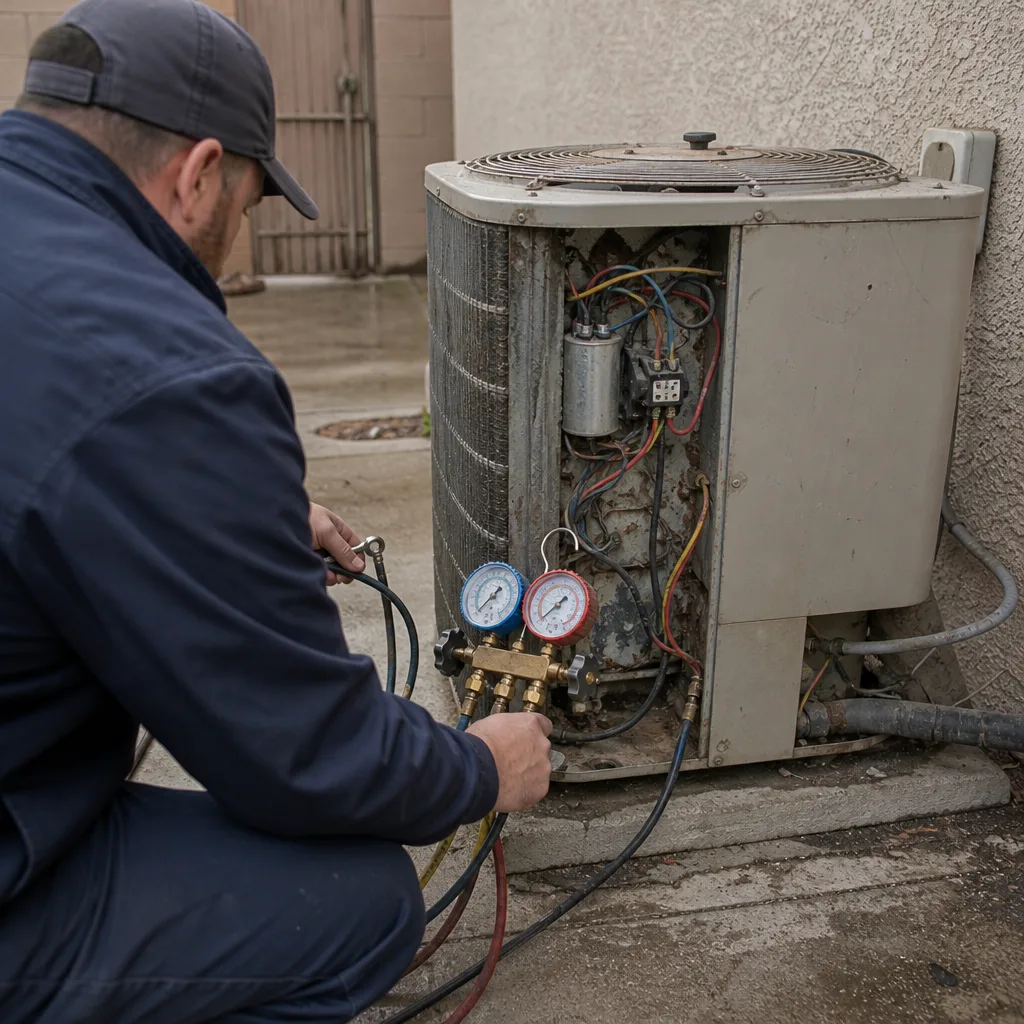 Before
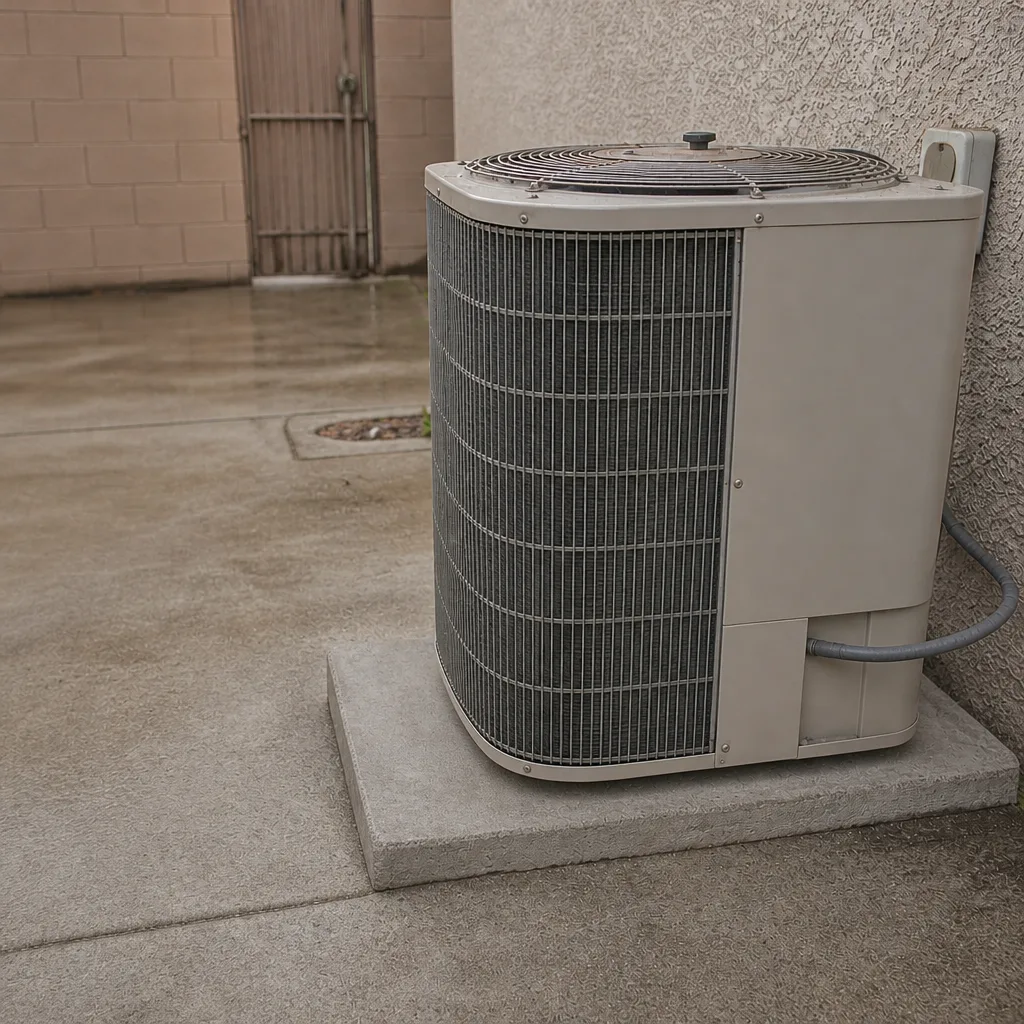 After
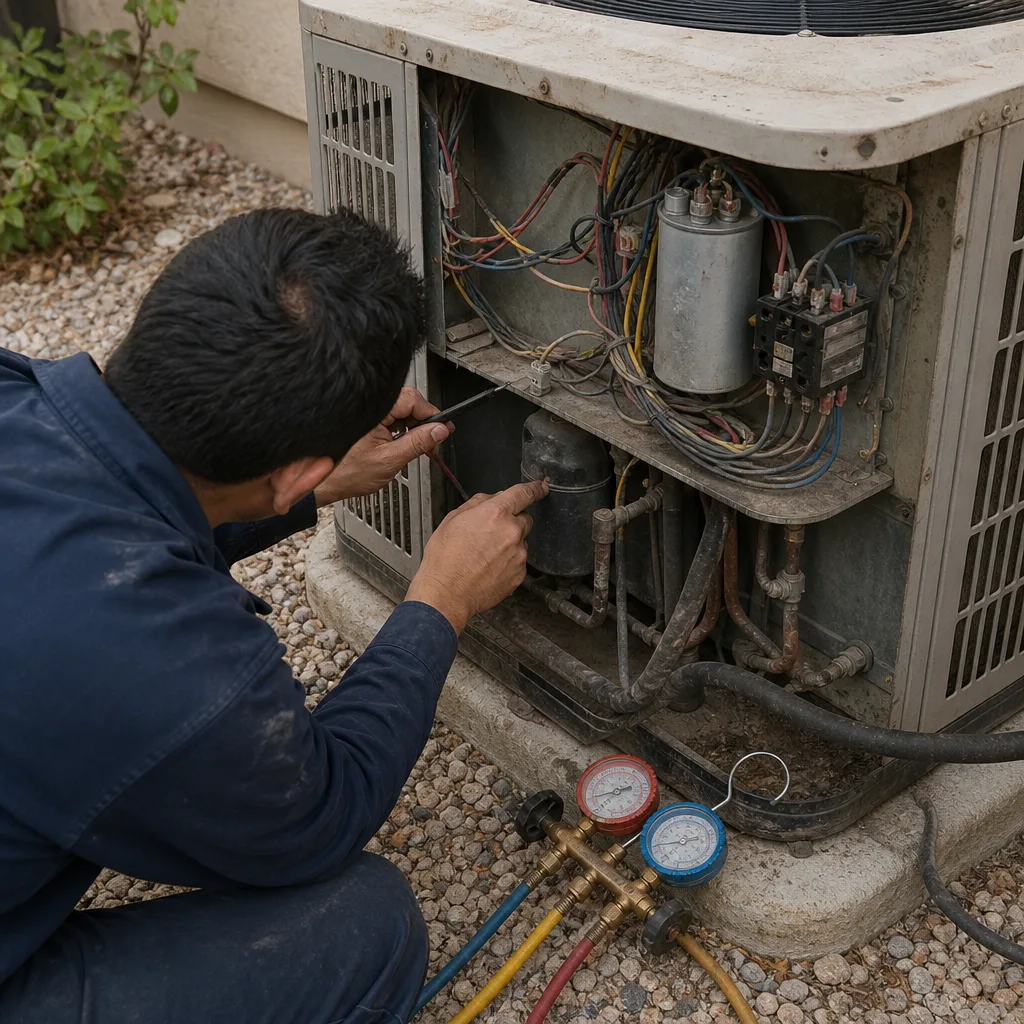 Before
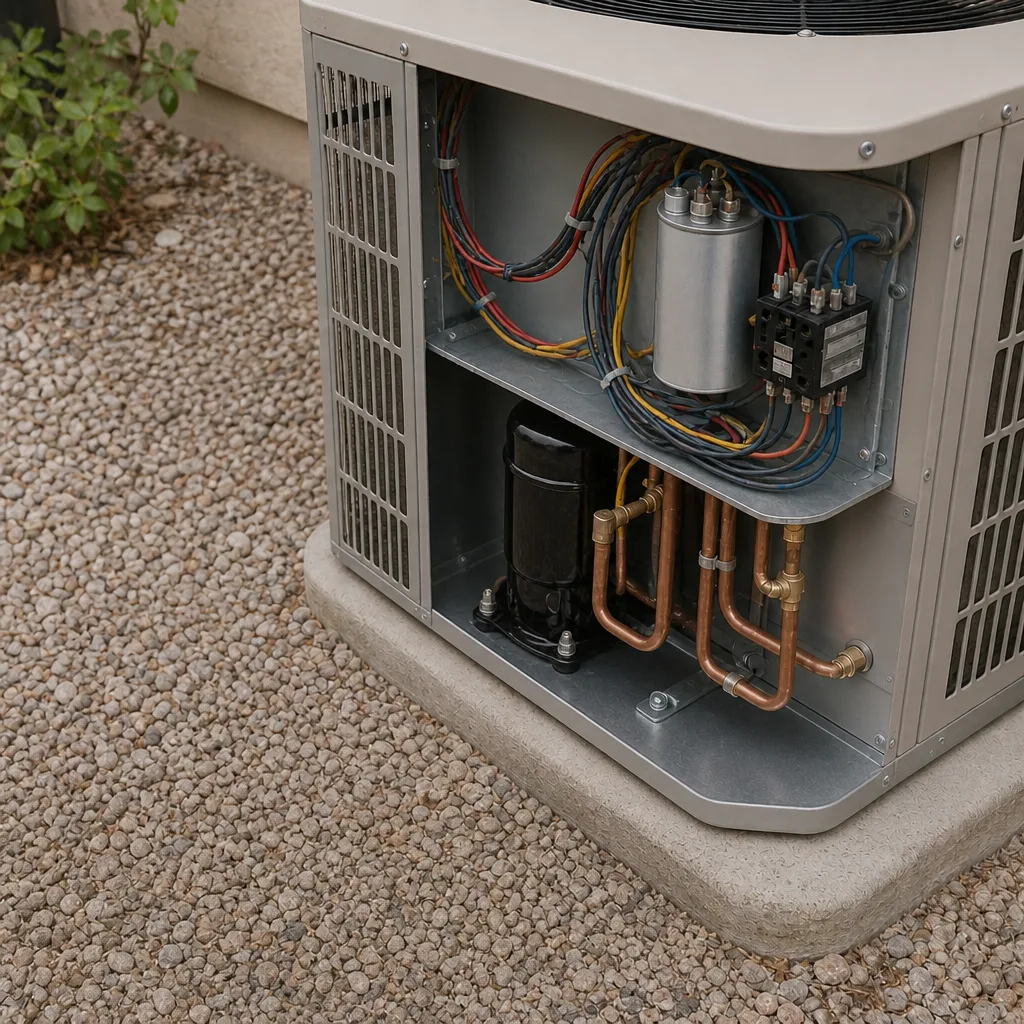 After
When to Call a Professional
Some HVAC problems are worth a professional call immediately, and some can wait for a scheduled visit. Call us for: no cooling at all during hot weather, a system that’s icing the indoor coil or the outdoor lines, no airflow from the vents, a burning smell from any part of the system, refrigerant leaks (evidenced by ice, hissing, or declining performance), compressor or breaker trips, and any install or replacement decision. Refrigerant handling and compressor repair are not DIY work – the refrigerant circuit is under pressure and mishandling it can cause serious injury and release refrigerant into the air. If you smell gas or see sparks anywhere on the system, shut off the disconnect and call before touching anything else.
For a system that’s still running but underperforming, a diagnostic visit is the right call. Repair or replacement, we diagnose first and quote in writing before any work begins. AC Replacement Mesquite offers free estimates in Mesquite – call (866) 764-5851. We answer 24/7. Fast dispatch from 7am to 7pm, Sunday through Friday.
Frequently Asked Questions
Ask for their Nevada C-21 license number, then look them up in the Nevada State Contractors Board license search. Check that the license status is active, the classification is C-21, and the business name matches your quote. The whole check takes under two minutes, and it’s the single most important step. Call (866) 764-5851 for an exact quote from us – estimates are free.
No. Nevada does not recognize out-of-state HVAC licenses, so a Utah contractor needs a Nevada C-21 to work legally in Mesquite. If they’re licensed in Utah only, they need to subcontract with a Nevada-licensed contractor who pulls the permit and carries liability. Ask for proof before any work starts. When you call us, we’re happy to confirm our credentials.
Yes, and you should refuse to move forward with any contractor who won’t run one. Manual J is the industry-standard method for sizing HVAC equipment, and in Mesquite’s hot climate, right-sizing prevents short cycling, comfort problems, and premature compressor failure. It’s a small part of the job cost and a big part of whether the system works. Call (866) 764-5851 to schedule a replacement estimate.
Repair is usually the right call if the system is under 10 years old, the repair is a single component like a capacitor or contactor, and the refrigerant circuit is intact. Replacement makes more sense if the system is 12 to 15 years old, on its second or third major repair, using phased-out R-22 refrigerant, or can’t keep up on hot afternoons. A proper diagnostic gives you the answer, and we quote the repair and the replacement side by side. Call (866) 764-5851 for a written estimate.
Ask three things: the Nevada C-21 license number (verify on the NSCB), the physical Nevada address on the license, and whether the company has a service relationship with your system that continues after installation. A passing-through contractor has a Utah license or no license, gives you a PO box instead of a street address, and can’t tell you who’ll service the system next summer. Call (866) 764-5851 to talk to a local AC specialist.
We service nine major brands: Carrier, Trane, Lennox, American Standard, Goodman, Rheem, York, Daikin, and Bryant. That covers nearly every residential system installed in Mesquite homes. We’re brand-neutral, so we recommend the equipment that fits your budget and your home’s load calculation rather than a single manufacturer. Single point of contact for repair, install, and maintenance. Call (866) 764-5851 for a free estimate.
The Bottom Line
Hiring an HVAC contractor in Mesquite comes down to four verifications. License: current Nevada C-21, verified on the NSCB, with the business name matching the quote. Sizing: Manual J load calculation before any replacement quote, no exceptions. Written estimate: model numbers, labor scope, permits, and warranty spelled out. Payment terms: a deposit for equipment is normal, payment in full upfront is a walk-away. Out-of-state credentials don’t substitute for Nevada licensure, and “we’ve done this a thousand times” doesn’t substitute for a load calculation. Do those four checks and you’ll hire someone who can be held accountable. Skip them and you’re rolling dice.
From routine tune-ups to full system installations, one call covers it. We’re an AC specialist working on nine brands across repair, installation, and maintenance. Call (866) 764-5851 for a free estimate. We answer 24/7. Fast dispatch from 7am to 7pm, Sunday through Friday, closed Saturday. Whether you need a repair today or a full replacement decision, we give you an honest assessment first.
Written by the team at AC Replacement Mesquite.